

For the last 2 years, I made a bet to grow on LinkedIn to generate leads and awareness for Sitechecker. I worked hard, but my approach evolved a lot.
At first, my focus was only on constantly publishing posts to grow followers and connections organically.
Then I’ve added direct messages by cold and warm prospects to convert people on the demo.
Then I’ve launched influencer marketing campaigns to check how I can scale my best-performing posts via non-English speaking influencers.
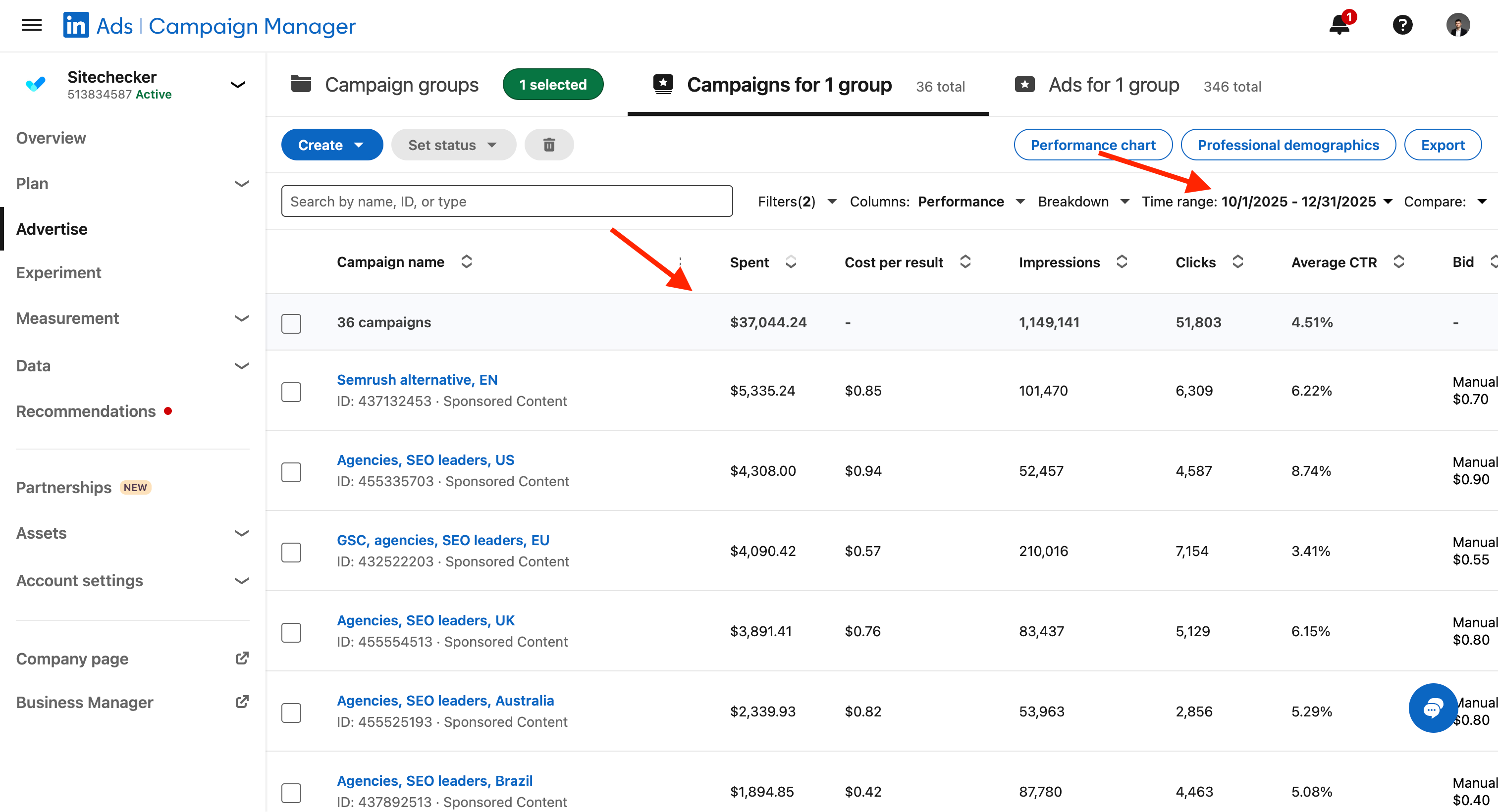
And finally, in Q4-2025, I’ve decided to test thought leadership ads.
The reason I’ve decided to test them is simple → the content that sells best gets little organic reach.
The most viral types of posts are: news, lead magnets, spicy opinions, and checklists. You still need to publish them to be known, build connections and trust, but it’s just not enough if you want to reach all your entire audience.
Even lead magnets. They can generate a huge list of prospects who will be happy to get your template, checklist, etc, but it doesn’t mean people need your software/services.
My approach and results
I chose the Engagement objective (I need people who are active on LI and ready for conversations) and manual bidding (to test ads with a smaller possible budget).


At first, I structured my campaigns like one campaign = multiple countries and one post, but then I switched to one campaign = one country and multiple posts.
The first approach helps you to get more attention for each post, but such campaigns compete with one another because you target the same audience with different content, and increase the final price for you.
The second approach helps you delegate to LinkedIn to decide which posts are worth promoting based on your goal and manage your manual bids for each country flexibly.
I also learned a lot from the how-to posts of paid ads experts Jonathan Dane and Patrick Cumming. They say that it’s better to use Brand Awareness, not Engagement, goal for thought leadership ads, and the target metric in such ads should be:
Audience penetration > 60-70% → because you have always only 5% of people who are ready to buy among 100% target audience, and only focusing on full penetration helps to achieve all possible buyers.
Average post frequency = at least 10 times.
I haven’t tried this approach yet, but I plan to do so this quarter and compare it with my old settings.
After the first test in October and disabling ads in low-performing countries, November became the best month. For $13,500, we’ve generated 30 scheduled demos, and additionally, 20 people requested a free trial to play with the app. So, the cost is around $270 per MQL and $450 per SQL, if we measure the impact of ads in the 30-day window.
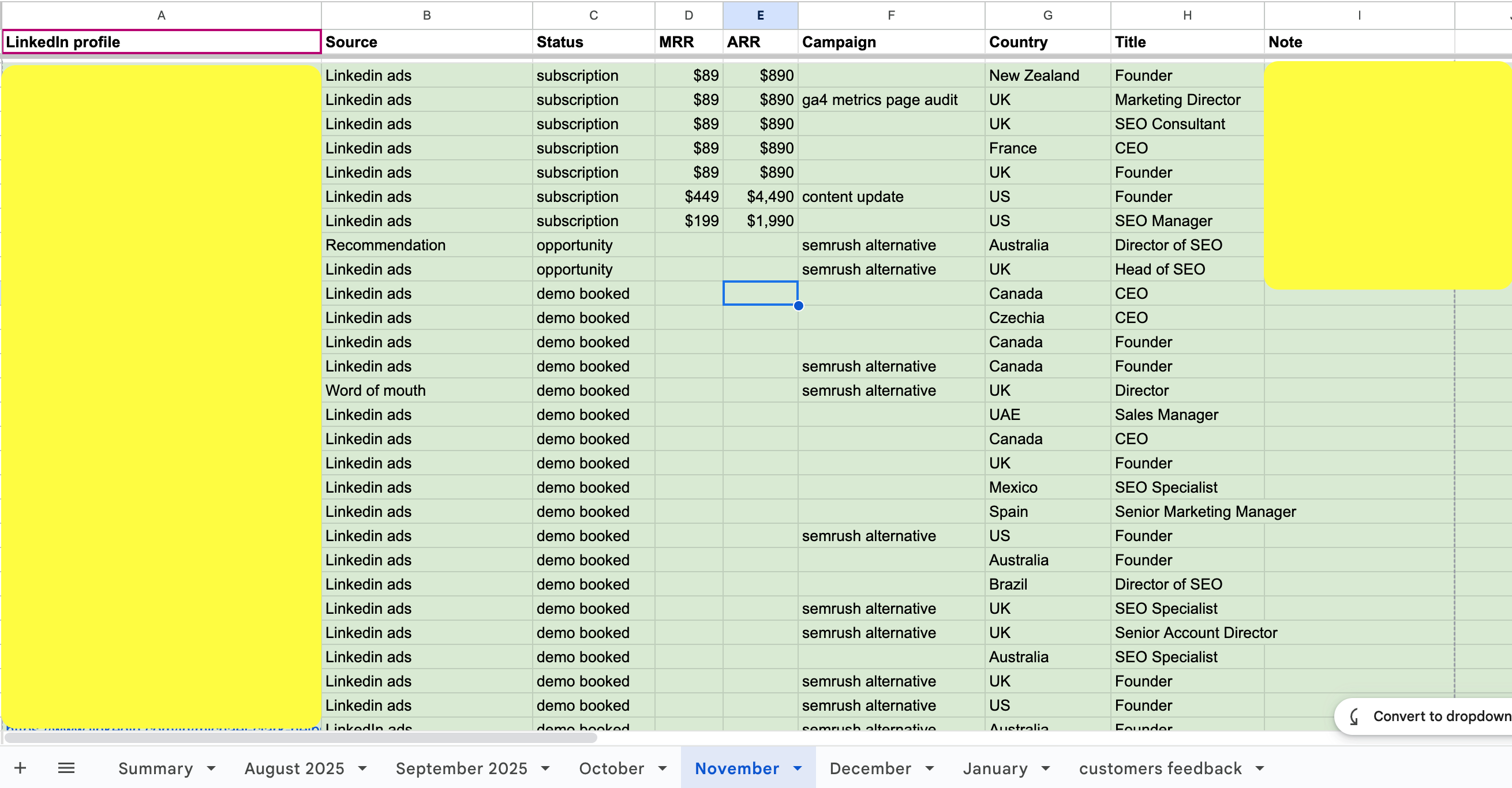
The most interesting part is that I’ve detected clear winners among posts, why our audience is interested in our product → it’s looking for a Semrush alternative.
Here are my top posts sorted by generated leads:
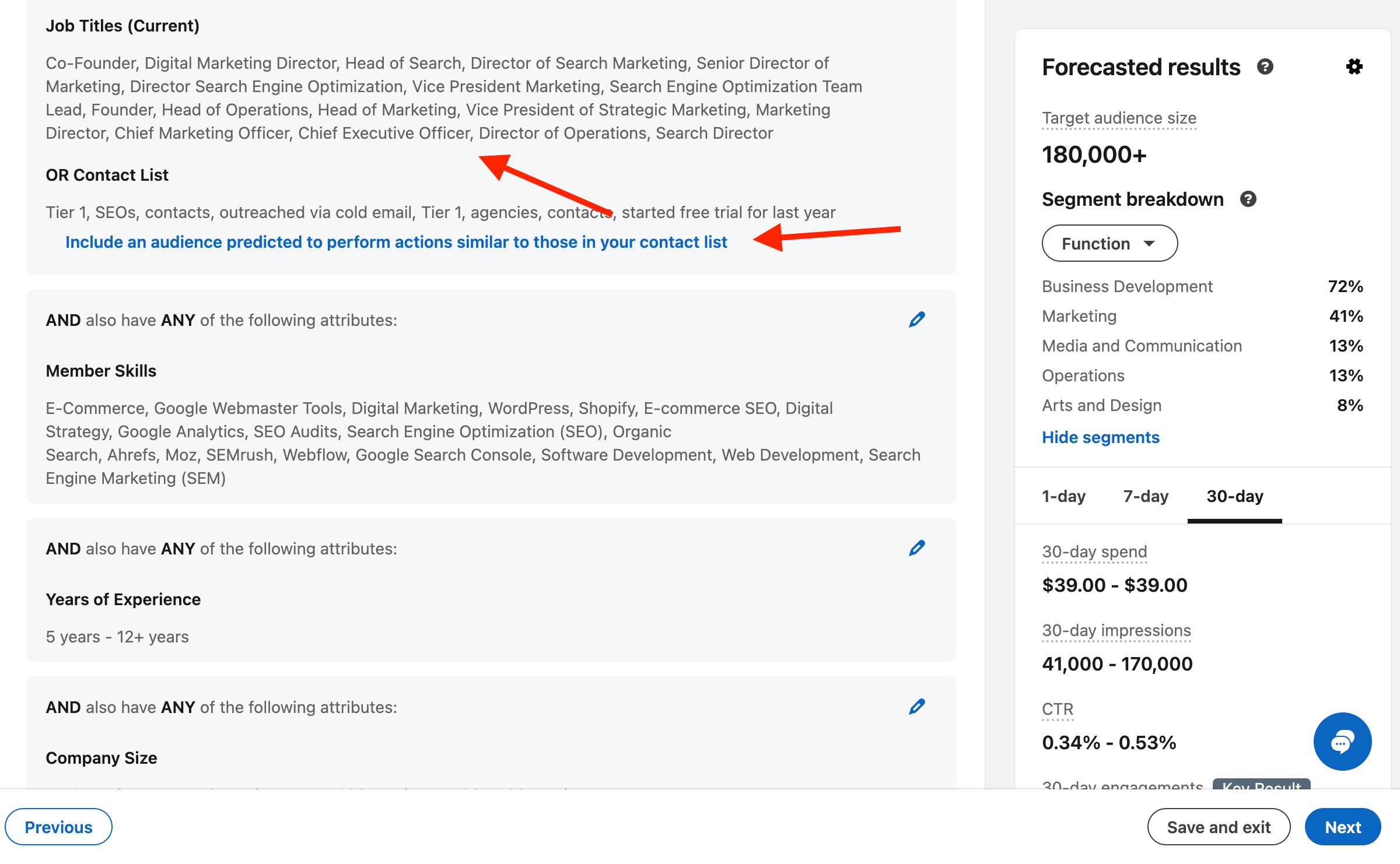
I target agencies by:
industry (the main filter: Marketing Services, Advertising Services)
titles and years of experience (I need only decision makers)
skills (it helps to exclude people who run agencies that don’t do SEO)
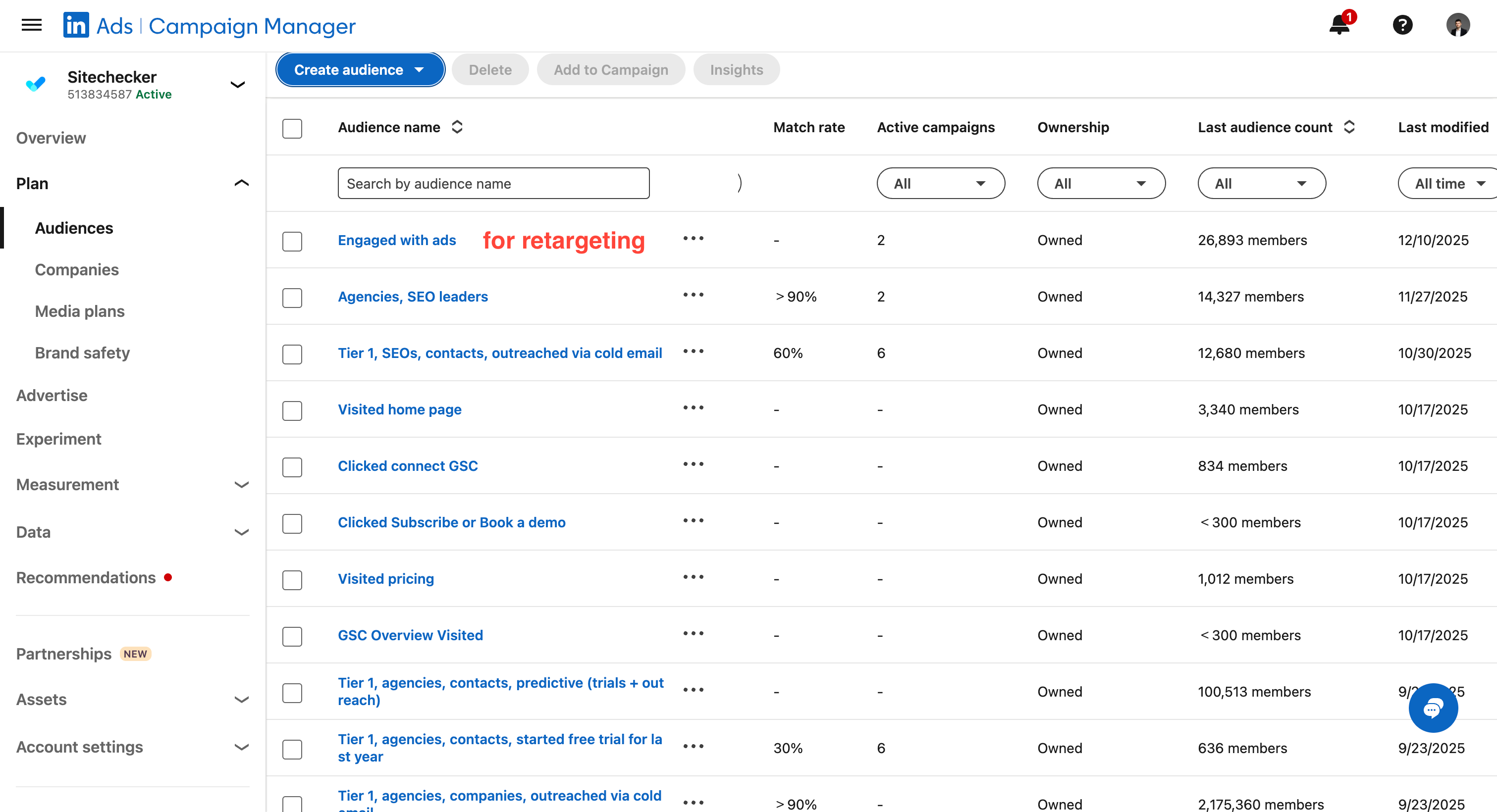
I also created a couple of audiences for targeting and retargeting:
The list of emails that our cold email outreach agencies collected
Users who engaged with ads
Users who made important actions on the website
The main lessons
1/ You need more posts.
You have to post about your product/service under different angles with different hooks and images to understand what triggers your audience.
I have 15 posts in the campaign, and I add a new post each time we deploy a new important feature, or I get an interesting insight from the sales call.
2/ When you find a topic that performs well, create more posts around it.
When I found that first post about Semrush alternative works so well, I focused my attention on looking for more gaps around this topic.
3/ The design of your posts matters a lot.
Almost all of my posts contain both a link to the website and a call-to-action to ask for a trial, if the reader is interested. Some people like to explore the tool themselves, and some want a demo. It helps to target both types.
4/ I underestimated how deep I should dive into it to make it work.
I still feel that I can get much more from it via:
experimenting with bids, budgets, and campaign objectives;
creating more audience-based email lists and predictive audiences;
publishing more posts in different formats;
adding campaigns for more countries.
Now I understand how to merge organic posting and paid ads into one system.
The organic posts build credibility and basic awareness, but you are limited by LinkedIn, and most importantly, you often get likes and engagement from different people than you target.
I would like to hear your thoughts if you have had some experience with this type of ads.
Try my templates, if you are tired of the non-friendly interfaces of GA, GSC & GAds: