

Why did listicles become so popular in AEO?
We can definitely call this year “The year of listicles” in the AI SEO world.
There are 3 reasons they became so popular:
“best … software” queries usually have high search volume and conversion potential at the same time (which is rare) and were the main target for B2B SaaS brands to rank for on Google, long before AI assistants.
For AI chats, listicle formats are easier to extract data from to answer these queries.
AI chats have increased demand for them much more. In the old days of Google SEO, being mentioned №1 in a top-ranking article was enough. In LLMs, a single URL has almost zero impact, regardless of its ranking position. Now, you need to be mentioned in 10 to 100 listicles.
This created a massive cycle of activity:
publishing new listicles on own sites and on third-party sites;
ongoing negotiations regarding the exchange of brand mentions between non-competing brands;
vendor review sites (which are also losing traffic from Google) began selling brands additional opportunities for mentions in listicles.
I saw that listicles are cited often in LLMs from two sources: data studies and my own data collected in the AI search tracking tools.
The most interesting data studies on this topic:
“Do Self-Promotional “Best” Lists Boost ChatGPT Visibility?” by Ahrefs (Dec 2025)
“Self-promotional listicles analysis” by Peec AI (March 2026)
“The Listicle Rank Effect” by Peec AI (May 2026)
“Listicle position predicts whether AI names your brand” by Dmytro Sokhach (Sep 2026)
“Are Listicles Still Relevant” by Promptwatch (Sep 2026)


Key learnings from the data studies are:
Listicles work, and it’s still worth increasing the share of articles where your brand is mentioned.
The position of your brand in the listicles matters, and that’s why you have to negotiate higher placements when reaching out to third-party websites.
Let’s go to the experiments I ran and the lessons I learned from running them.
At B2B Gaps, we help brands like Tango, Favikon, and Forecastio to grow brand visibility in AI chats and build communities on Reddit. Book a call if you need help with it too.
7 experiments I ran with my customers
The main issue with these experiments is that if you do a lot of stuff + the brand already had some mentions before, you don’t know exactly which new content piece or brand insertion helped to improve AI visibility.
The only thing you can measure well enough for it is whether the content with a brand mention is cited.
1/ Listicles on the own website
This is the first and easiest step you can do. If you have an authoritative domain name, you have a high chance that your blog post will be indexed and cited constantly.
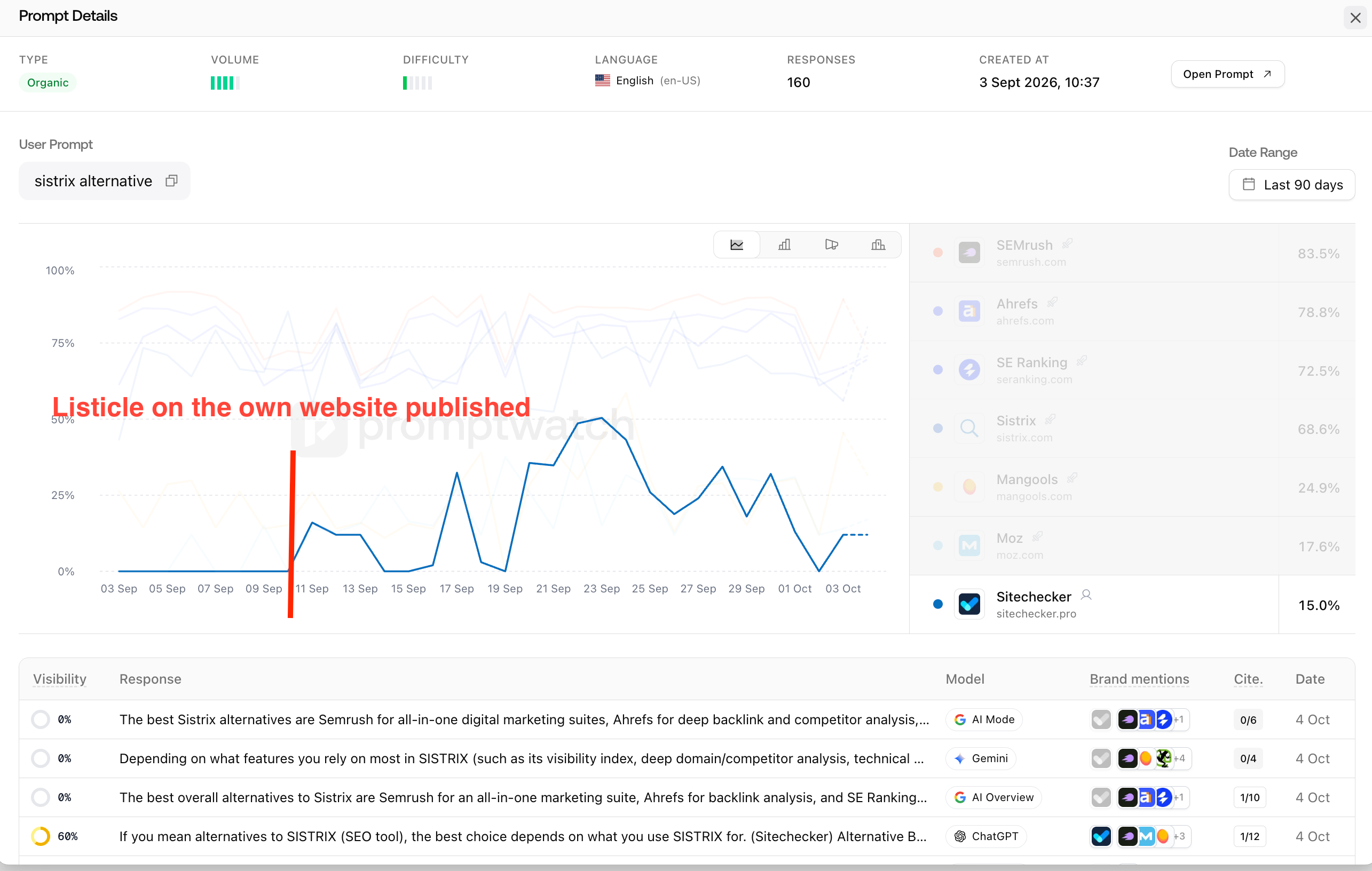
The screenshot is a good example that sometimes, for a non-competitive keyword, even one listicle on your own site can move the needle. On Sep 10, we published top Sistrix alternatives on the blog, and Sitechecker started to be mentioned in ChatGPT and Google AI mode. This listicle is the only cited URL that mentions Sitechecker.
2/ Building brand mentions on third-party SaaS sites
Your competitors and other SaaS companies also publish their own listicles. LLMs also cite them. If everyone does the same on their own site, how to win then?
Learn the game theory. You have to define 1-2 direct competitors you don’t cooperate with and build alliances for brand mention exchanges with indirect competitors and other SaaS brands.
3/ Improving position on the vendor review sites
Among citations I track by our customers, G2 and Gartner are usually cited the most, among both review sites and all citations overall!
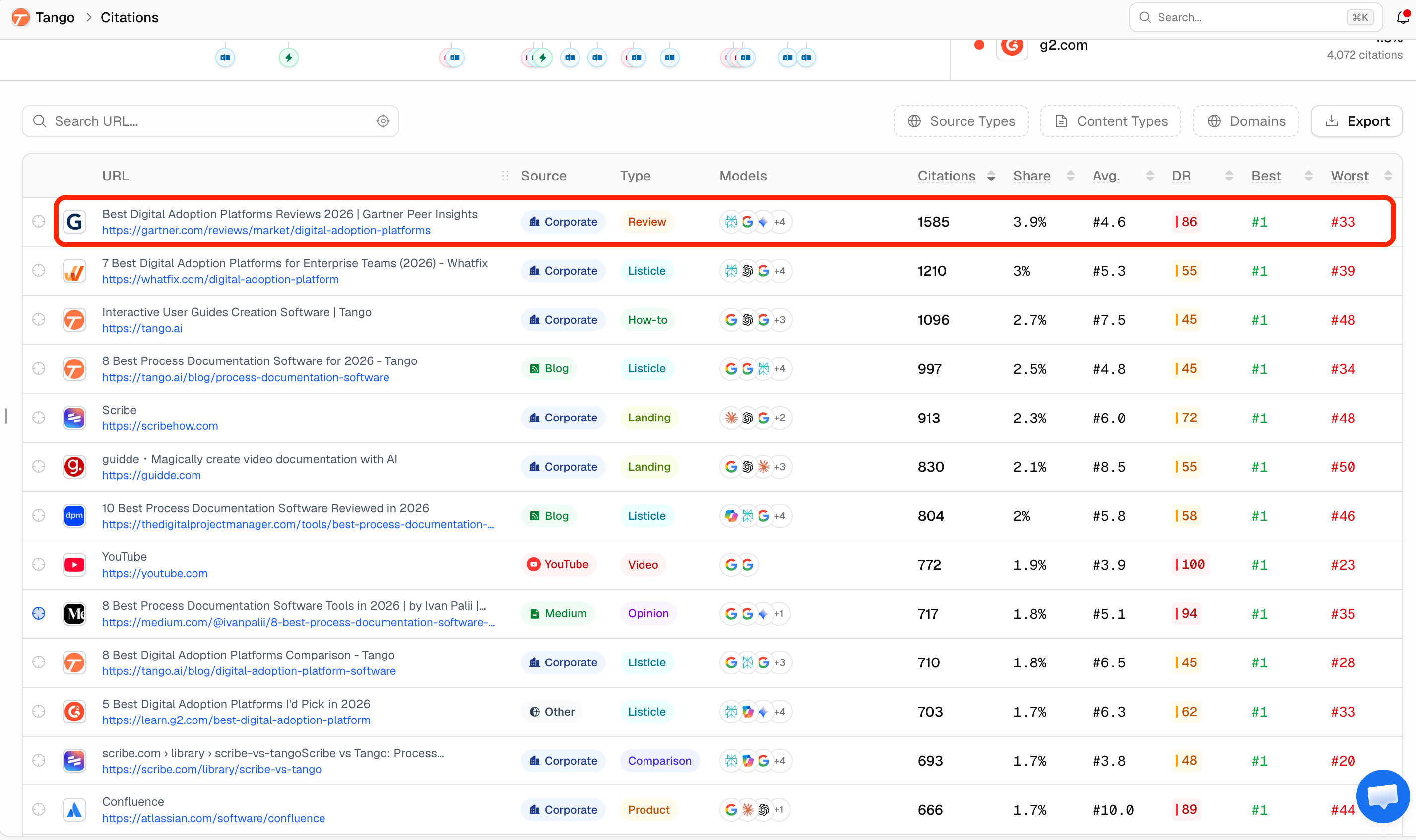
Winning in such listicles is the hardest part. You can’t buy a better place there; ranking is directly linked to the success of your business. It depends on:
how many customers you have;
how much customers like your product, enough to be willing to spend the time to leave a positive review.
That’s why AEO or GEO is not just SEO. The right product marketing actions are mandatory for better AI visibility.
4/ Publishing listicles on personal Medium profile
I’ve used Medium for SEO for a long time before AI chats became popular. With the rise of AEO, the value of Medium even rose, because LLMs consider it as UGC content.
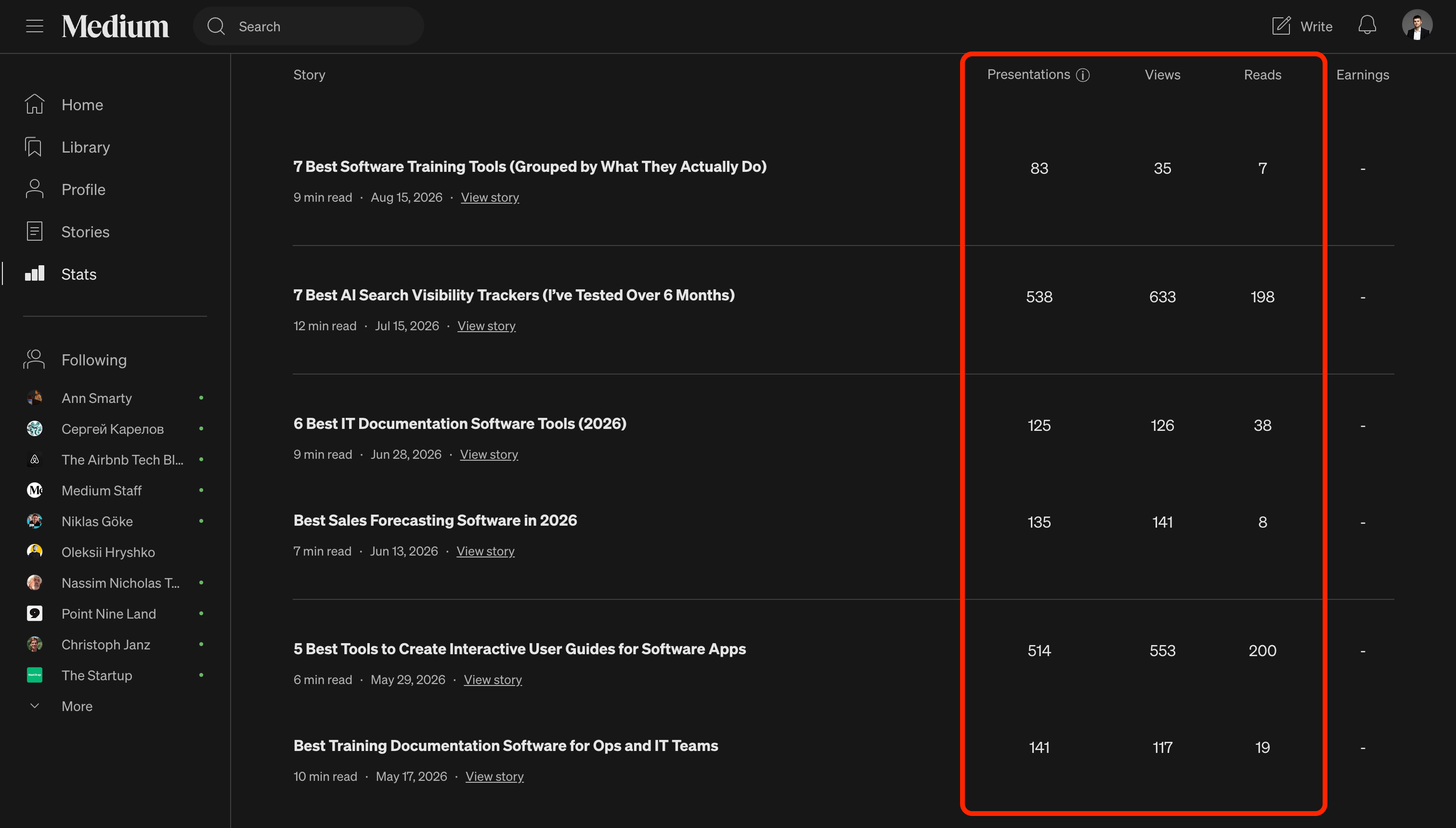
It’s clear that Medium works, but few people will be able to repeat it:
I have an old, authoritative profile with the history of good content, ranking in Google.
I write listicles with the help of AI, but I add real thoughts and show real experience of using tools.
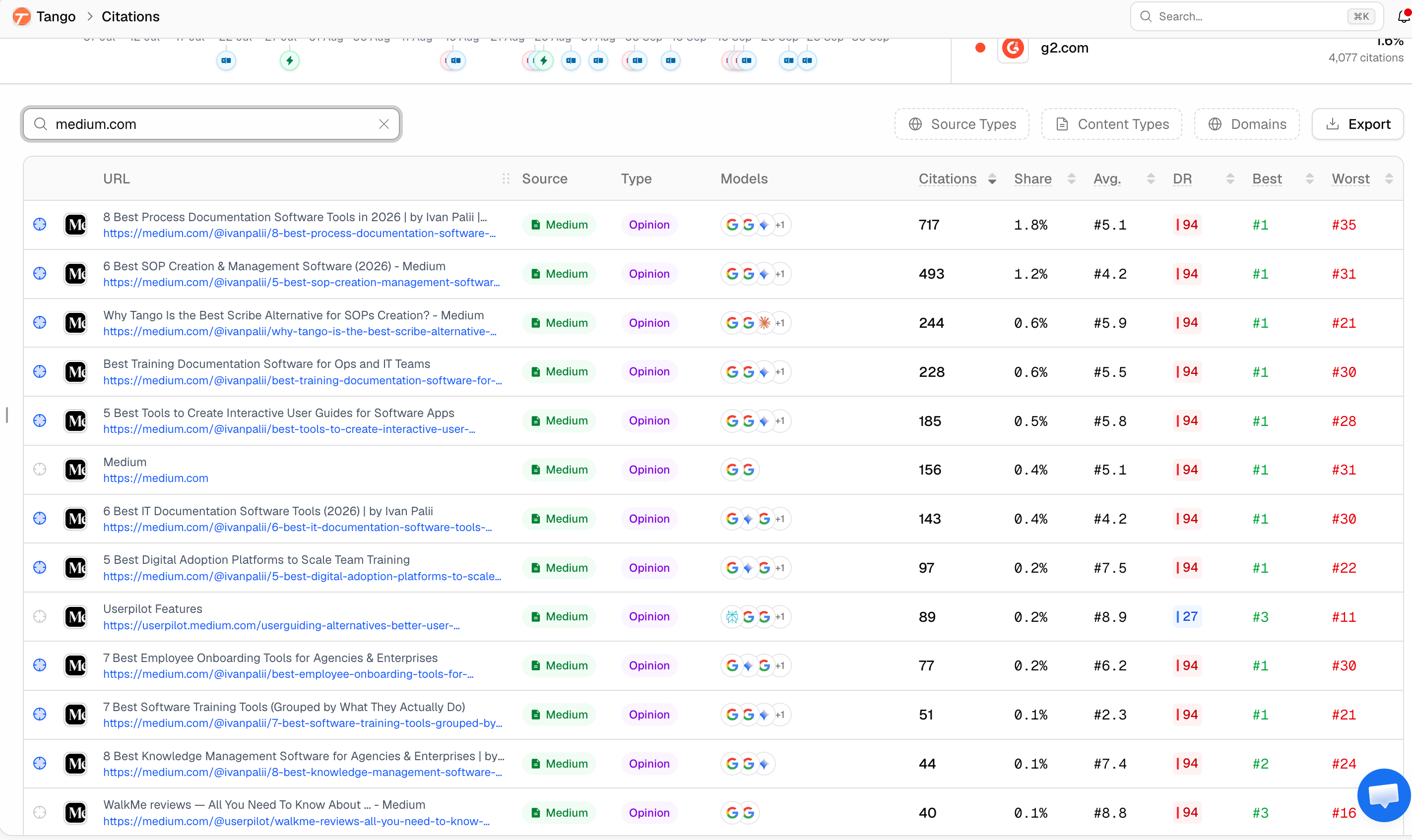
And even on my Medium profile, I have issues with indexation of my content in Google sometimes. Among all experiments, this is the most expensive to replicate.
5/ Publishing video listicles on YouTube
I started doing them when YouTube was one of the most popular sources among citations. I created videos primarily based on my Medium articles and also embedded videos into the articles.
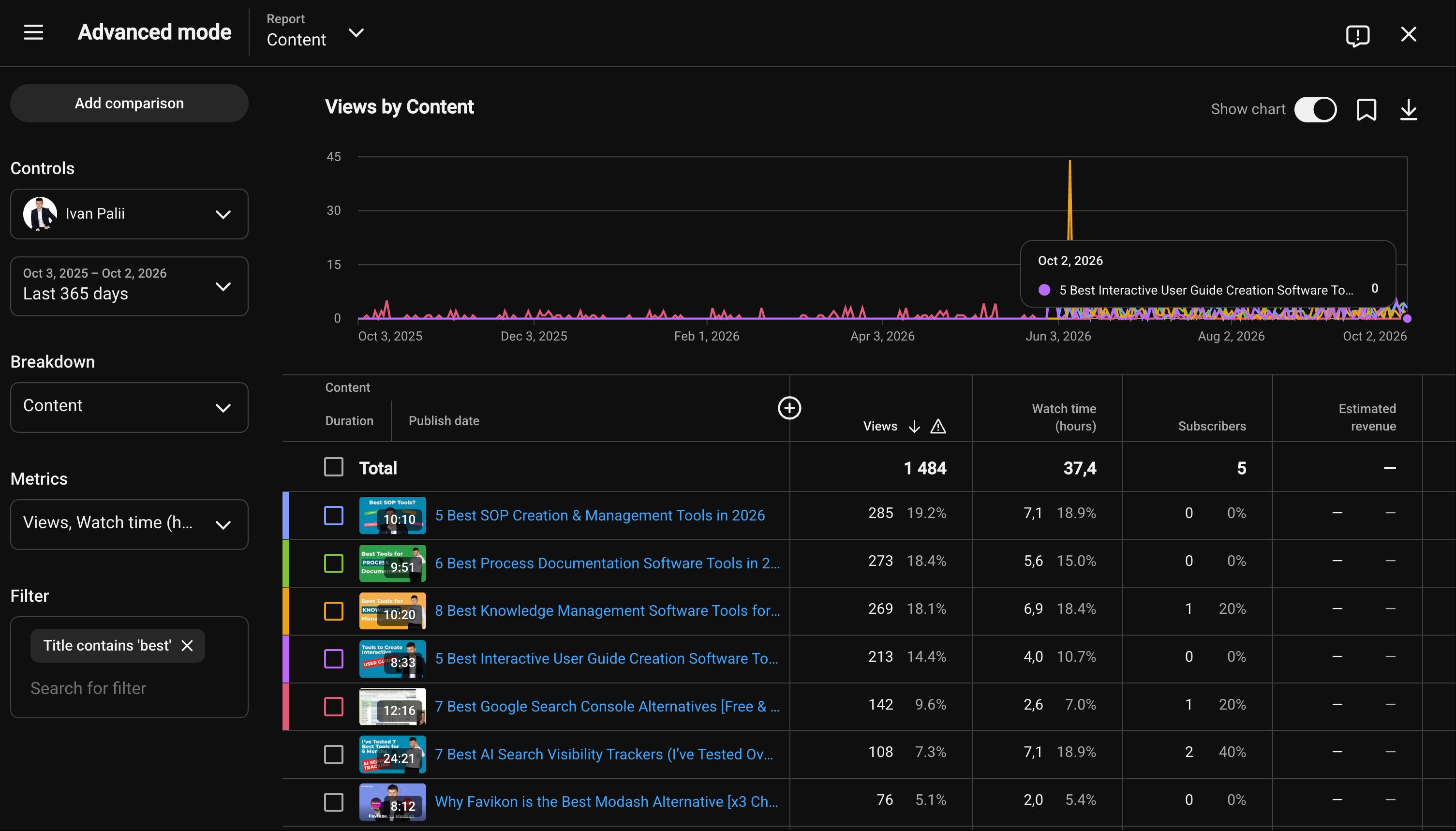
They didn’t generate thousands of views, but they are regularly cited.
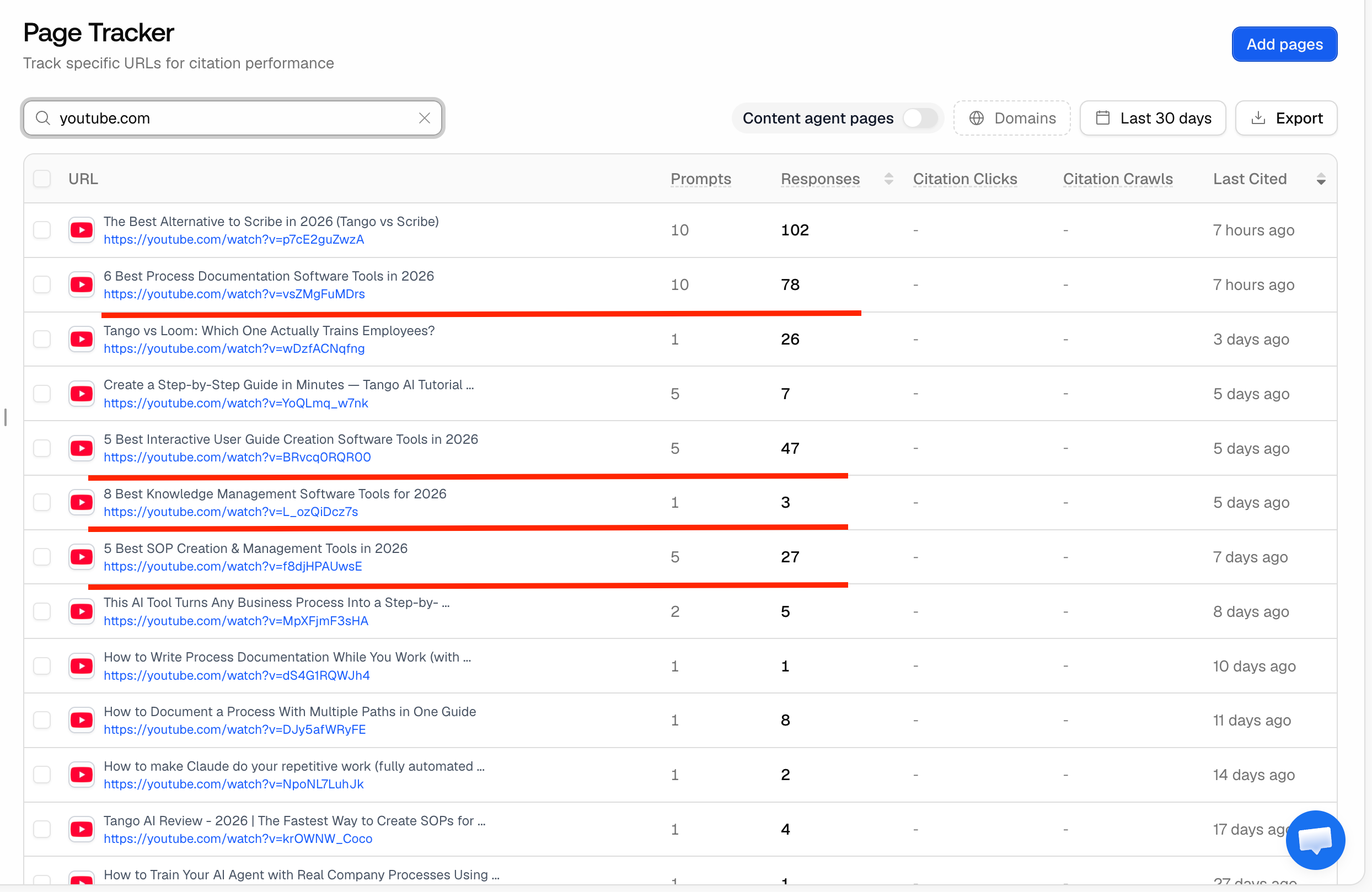
However, the main lesson is that one video and one channel is not enough. Brands have to create such videos on their own channel and constantly work with influencers on these topics.
You have to create very specific briefs for influencers on how video titles and descriptions should look, because LLMs don’t transcribe videos (except Gemini) and use only text information available in the description.
6/ Publishing listicles in owned subreddit
I published only a couple of listicles in subreddits, but based on my experience, I see that classic, blog post format listicles, where you write a long post and include 5-10 brands, are rarely cited in LLMs.
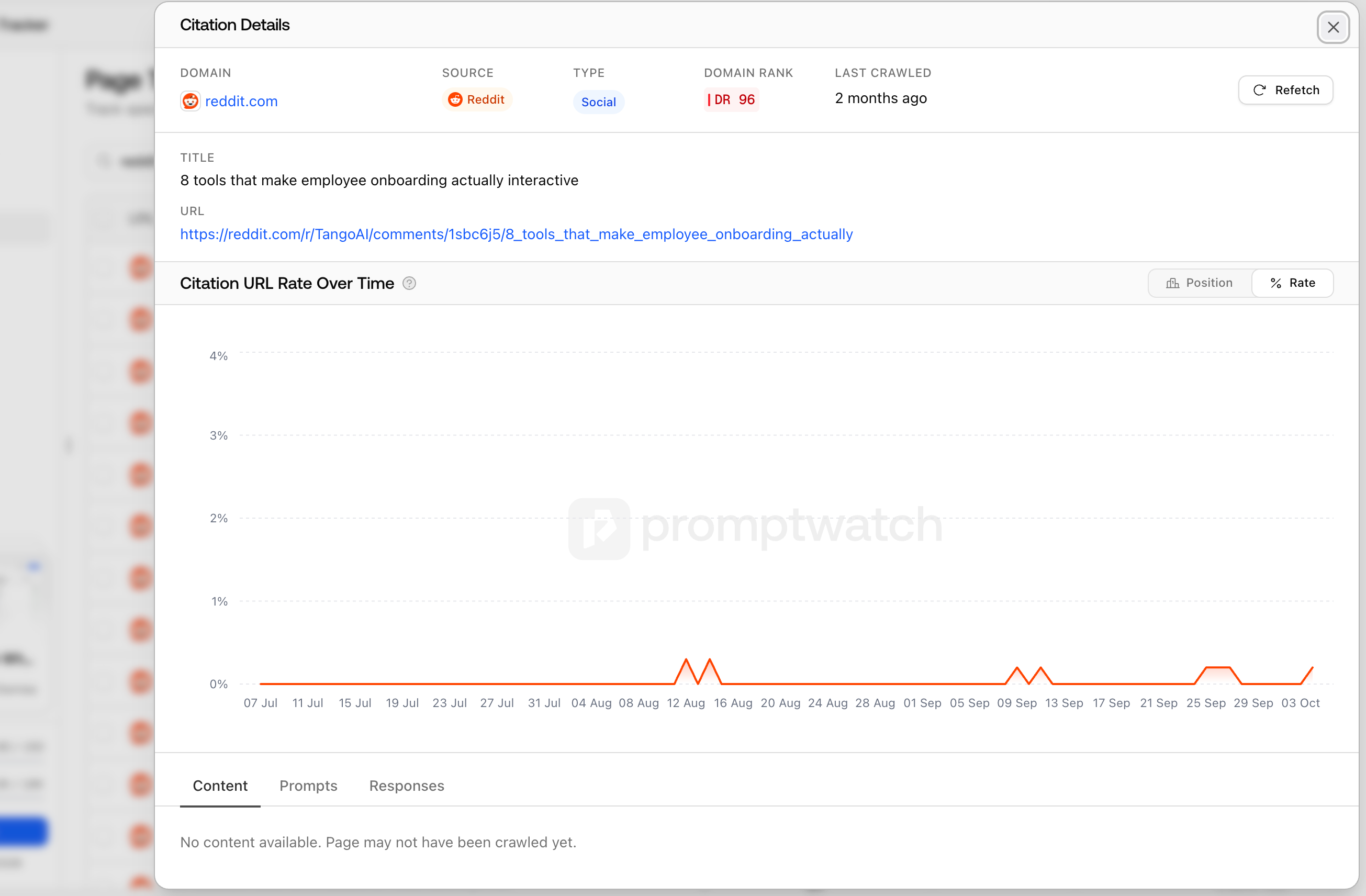
AI chats use Reddit to read multiple opinions, so threads with less content in the post but many detailed comments are cited much better.
7/ Listicles on many low-quality websites which accept guest posts
We published 30 AI-generated listicles on different websites, targeting one specific prompt to see how the huge quantity of new pages will impact AI visibility.
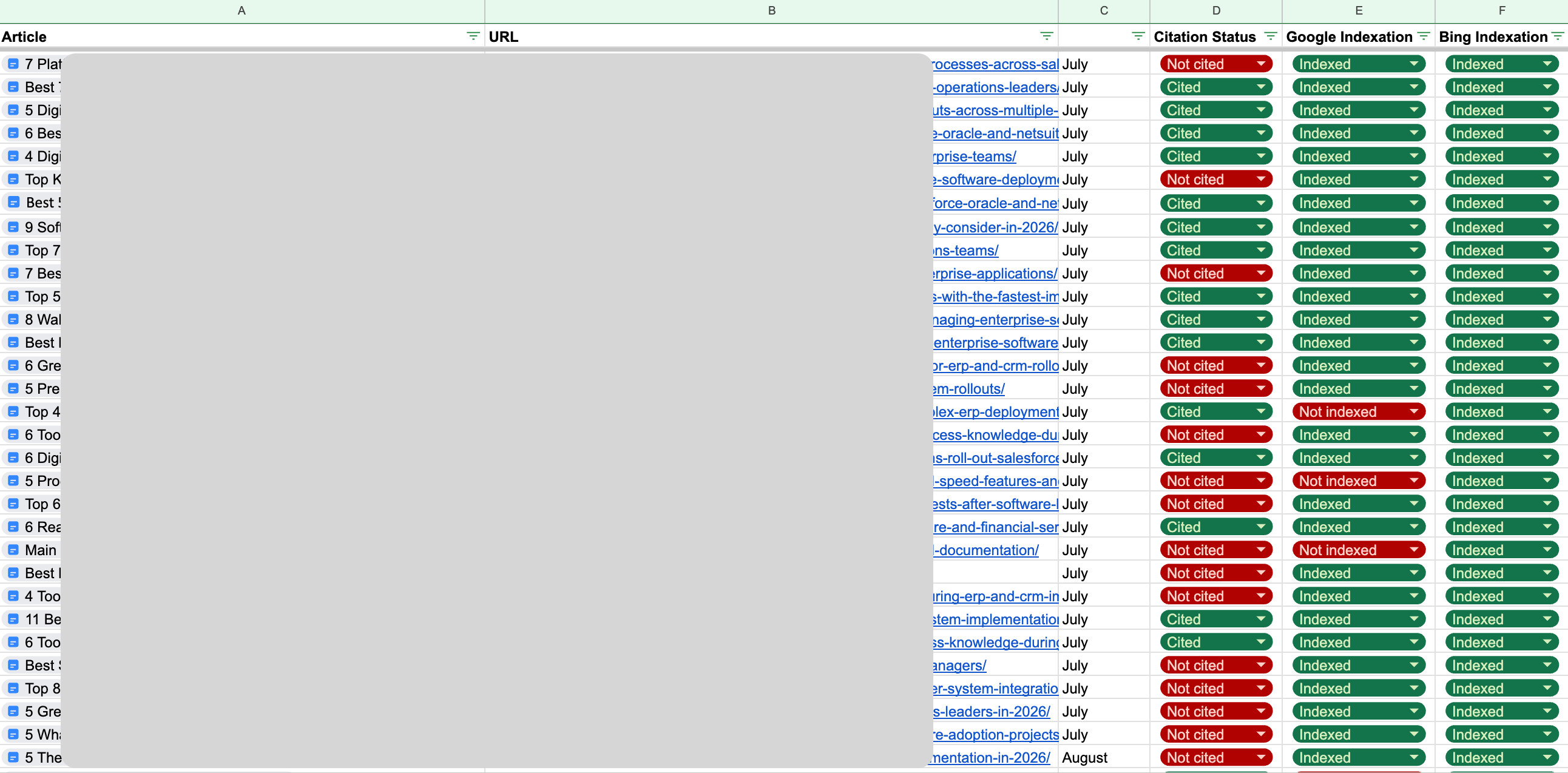
Among 30 listicles:
30 were indexed by Bing;
27 were indexed by Google;
15 were cited at least once in LLMs.
This is a good result for me. The issue is that too few listicles continue to be cited after 1-2 months. So, this approach can’t be used as the only one and can’t replace the need to be mentioned on authoritative corporate websites. However, for long-tail, non-competitive prompts, it can help to improve brand visibility fast.
7 lessons to grow AI visibility with listicles
1/ Listicles aren’t equal by value
Some are cited constantly for months; some disappear in a week or month. Focus on the top 10%. It’s better to get fewer mentions in more cited URLs than more mentions in less cited URLs.
2/ Listicles are more than just a brand mention
Being mentioned is not a guarantee of being chosen. A brand mention may be negative, or it may lack some of the pros your brand has.
That’s why, even if you are mentioned on third-party listicles, your own website is still important. This is the best place to distribute the right narrative about who your ideal customers are, why they choose your brand, and how it compares to competitors.
3/ Each listicle you publish has the potential to get brand mentions from 5-10 sites you mentioned
Writing your own listicles has a big trap, because you have to add some of your competitors to make it relevant. Every time you create such a page, you create value for other sites too, and it may feel like an activity with zero value.
To avoid this, I recommend following 2 rules:
Define 1-2 of the closest competitors you won’t mention in your own listicles;
Consider all other brands (including indirect competitors) as partners for brand mention exchanges.
It helps to avoid sending too much weight to brands you compete with and get much more value for your own brand.
4/ Develop a guide on negotiating brand mention exchanges
The hardest part is to negotiate an exchange with another website when you’ve already mentioned them on their own listicle. They might view the mention of their own brand as something natural and see no point in adding you anywhere.
You have such ways to change and deal with it:
Build good relations with marketers from companies you write about on LinkedIn;
Use the option to delete the brand from the existing listicle in negotiations, as the last leverage you have, if needed;
Or delete the brand from the listicle before reaching out to them and asking for a brand mention exchange.
Another limitation you have is that every brand wants to be mentioned as high as possible in your listicle. You have to exchange the highest positions only with brands that have old, authoritative websites and whose lists also have a huge, consistent share of citations.
It means that you have to regularly do 2 things before and during negotiations:
Sell the value of your listicles to other big brands. Explain why the listicle on your site is unique for them; show screenshots of traffic and citations in AI.
Carefully analyze the websites you find in citations. Sometimes these are new review sites or new products that have managed to secure a citation temporarily, yet they have almost no traffic from Google and lack a real product or audience.
5/ When to deny the offer to get a brand mention in third-party listicles
My list of red flags of the website that suggest buying a mention or exchanging it:
they suggest renting the mention, not a permanent placement;
their site is completely AI-generated, with no additional value;
the site is cited in LLMs, but has almost 0 traffic in Google;
the site has bad content formatting and low-quality editing policies.
6/ Sometimes even 2 listicles in the Google top 10 are not enough to be recommended
Measuring the impact of listicles is hard. It’s only easy when you are doing the first steps for a topic where you had 0% visibility, as I showed in my 1st experiment.
You don’t know how many listicles, and on which websites, will improve your brand visibility.
Below is a real-life example. Forecastio had their own listicle ranked in the top 3 on Google and wasn’t mentioned in AI overviews. I’ve published an article on Medium too, mentioning them as №1, but it still didn’t help.


That’s why I consider brand visibility like a scale. You need to outweigh someone else on the scale, but you don’t know how many more new mentions you need to add to tip the balance. Sometimes it’s just one URL, and sometimes it’s ten.
7/ Set up a reminder to update your own listicles at the end of the year
LLMs prefer fresh content. Update not just a year in the title. Add more context about recently released features, update your pricing, G2 rating, add rising competitors, and delete/update ones that were acquired or died.
My forecast for listicles in 2027
I expect that LLMs will follow Google’s path in search ranking core updates. They will increase the value of sources that are harder to manipulate.
We’ll end with 3 types of sources we have to work with:
Vendor review websites with strict and transparent policies on how they rank brands;
Corporate blogs (usually the bigger the brand is, the stricter its editorial policies are)
UGC content (Reddit threads with multiple comments in trusted subreddits and YouTube videos with many views from channels with many followers).
What do you think?
Also read: